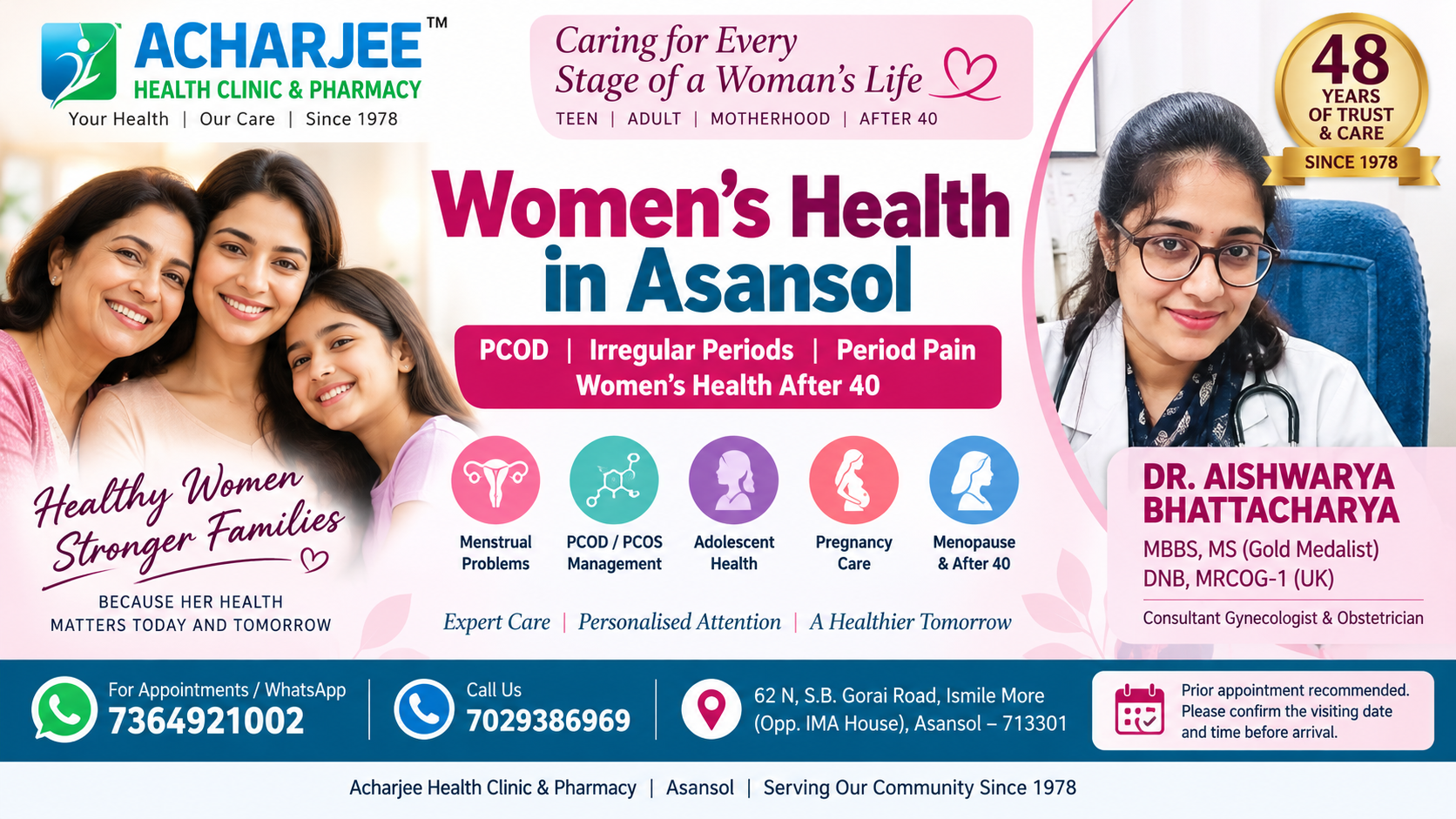
Women’s health is an important part of individual and family wellbeing, yet concerns such as severe period pain, irregular or missed periods, PCOD/PCOS and hormonal changes after 40 are sometimes ignored until symptoms become difficult to manage.
For women and families in Asansol, Burnpur, Raniganj, Kulti, Neamatpur and Barakar, understanding common warning signs can help them decide when it is appropriate to consult a gynecologist in Asansol.
Whether you are a teenager experiencing menstrual changes, a woman concerned about irregular periods, or someone approaching perimenopause, timely medical evaluation can help identify the underlying cause and guide appropriate care.
As women enter their 40s, hormonal patterns may begin to change as they approach perimenopause. Periods may become less predictable, while health priorities increasingly include breast health, cervical screening, metabolic health, bone health and menopause-related symptoms.
Regular health check-ups allow a doctor to consider symptoms, medical history, family history and individual risk factors before recommending appropriate preventive care.
Many women tolerate menstrual problems for years, assuming they are simply a normal part of having periods. However, severe or persistent menstrual pain, unusually heavy bleeding or significant changes in menstrual cycles deserve medical attention.
Recent health reporting by The Times of India (https://timesofindia.indiatimes.com/etimes/wellness/the-first-gynaecologist-visit-why-so-many-indian-women-delay-it/articleshow/130472547.cms) has also highlighted why many Indian women delay their first gynecological consultation and the importance of improving awareness around women’s reproductive health.
Severe Period Pain
Some menstrual cramping is common, but pain that repeatedly interferes with school, work, sleep or normal daily activities should be evaluated. Conditions such as endometriosis, adenomyosis, ovarian problems or uterine fibroids may sometimes contribute to pelvic or menstrual pain.
Missing or Irregular Periods
Changes in menstrual cycles can have several possible causes, including PCOS/PCOD, thyroid problems, pregnancy, significant weight changes, stress or other hormonal conditions.
The Mayo Clinic(https://www.mayoclinic.org/diseases-conditions/pcos/diagnosis-treatment/drc-20353443) provides further information about the diagnosis and management of PCOS.
Heavy or Prolonged Bleeding
Very heavy or prolonged menstrual bleeding should not simply be ignored. Depending on its severity and duration, it may contribute to iron-deficiency anaemia and may require medical evaluation to identify the underlying cause.
PCOD/PCOS (Polycystic Ovary Syndrome) is a common hormonal and metabolic condition affecting women of reproductive age.
PCOS can affect menstrual cycles, ovulation, hormone levels and metabolic health. Diagnosis is based on symptoms, medical assessment and, when appropriate, further investigations.
For a detailed patient overview of PCOS, the Cleveland Clinic(https://my.clevelandclinic.org/health/diseases/8316-polycystic-ovary-syndrome-pcos) provides additional medical information.
Women with PCOS/PCOD may experience:
Not every woman with PCOS experiences all of these symptoms.
Management depends on a woman’s symptoms, age, overall health and reproductive plans.
1. Nutrition & Physical Activity
Healthy eating patterns and regular physical activity can support metabolic health and may improve symptoms in some women.
2. Medical Treatment
Depending on individual circumstances, a doctor may recommend treatment to regulate menstrual cycles or address specific hormonal, metabolic or fertility concerns.
3. Long-Term Monitoring
Blood sugar, cholesterol, blood pressure and other health factors may need monitoring depending on individual risk.
4. Sleep & Lifestyle
Adequate sleep, sustainable exercise and overall lifestyle management can form an important part of long-term care.
Women from Asansol, Burnpur, Raniganj, Kulti, Neamatpur, Barakar and surrounding areas can consult Dr. Aishwarya Bhattacharya at Acharjee Health Clinic & Pharmacy.
Consultation may be relevant for women seeking evaluation and management of concerns including PCOD/PCOS, irregular periods, menstrual problems and general gynecological health.
Dr. Aishwarya Bhattacharya
Consultant Gynecologist & Obstetrician
Qualifications: MBBS, MD/MS in Obstetrics & Gynecology (Gold Medalist), DNB (Obs & Gynae), MRCOG (UK)
Experience: 8+ Years of Specialized Expertise
Acharjee Health Clinic & Pharmacy
Established 1978 | 48 Years of Trust & Care
Address:
62 N, S.B. Gorai Road, Ismile More
Opposite IMA House
Asansol – 713301
Appointments / WhatsApp: 7364921002
Prior appointment is recommended. Please confirm the doctor’s visiting date and time with the clinic before arrival.
Consider medical advice if periods become persistently irregular, unexpectedly stop, become unusually heavy or are accompanied by significant pain or other concerning symptoms. There are many possible causes, so individual medical evaluation is important.
An initial reproductive-health consultation during adolescence can provide guidance about menstrual health, development and preventive care. Earlier evaluation may be appropriate when there is severe menstrual pain, significantly irregular periods or other concerning symptoms.
PCOS is generally considered a long-term condition that can often be effectively managed. Lifestyle measures and appropriate medical treatment can help improve symptoms and manage associated health risks.
Regular preventive healthcare is important, but the frequency of individual examinations and screening tests depends on age, symptoms, medical history and individual risk factors.
The appropriate timing and frequency of mammography depend on age and individual risk. Women should discuss the most appropriate screening schedule with their healthcare professional.
If you are experiencing irregular periods, severe period pain, PCOD/PCOS symptoms or other gynecological concerns, you can contact Acharjee Health Clinic & Pharmacy for appointment information.
WhatsApp: 7364921002
Location: Ismile More, Opposite IMA House, Asansol – 713301
Please confirm the doctor’s visiting date and consultation time before arrival.
Medical Disclaimer: This article is intended for general health education and awareness. It does not replace consultation, diagnosis or treatment by a qualified healthcare professional. Seek appropriate medical attention for severe, persistent or concerning symptoms.